
Introduction: The Death of the "Campaign"
In early 2026, we are witnessing the final transition of marketing from a sequence of discrete human-led campaigns to a "living" system of autonomous orchestration. We no longer just "use AI tools"; we manage Agentic AI systems that plan, execute, and iterate. For brands, the target audience is no longer just the human consumer—it is increasingly the AI Agent acting on their behalf.
1. Beyond Automation: The Rise of Agentic AI
Traditional marketing automation was "if-this-then-that." Agentic AI is "here is the goal, find the path." In 2026, marketing agents are taking on operational responsibility for entire workflows:

The Shift from Clicks to Commands
In the first quarter of 2026, we are witnessing the end of an era. For decades, digital marketing has been an “Attention Economy” designed for human eyes. We optimized for the scroll, the click, and the emotional resonance of a banner ad.
But as the “Digital Familiar”—personal AI agents that act on behalf of humans—becomes a household reality, the primary target of your marketing is no longer a human. It is an autonomous agent. Welcome to the era of Business-to-Agent (B2A) marketing.

Beyond Automation: Why Agentic AI is the Definitive DSP Trend of 2026
As we cross the first quarter of 2026, the digital marketing landscape is witnessing a tectonic shift. We are no longer just talking about “AI-assisted” tools or simple machine learning algorithms. We have officially entered the era of Agentic AI in programmatic advertising.
For modern marketing stacks, this isn’t just a feature update—it’s a fundamental reimagining of the Demand-Side Platform (DSP) for a high-velocity, privacy-first market.

The Macro Context: A Warning from the Job Market
The recent US economic data for February 2026 revealed a startling and unexpected loss of 92,000 jobs. While traditional economic analysts scramble to blame interest rates or consumer sentiment, a deeper trend is emerging within the MarTech sector. We are no longer in an era of “AI-assisted” work; we have entered the age of Autonomous Execution.
The pressure for efficiency is at an all-time high. Companies are realizing that the “Execution Gap”—the time and cost between a strategic decision and a live campaign—is the biggest leak in their marketing ROI. To plug this leak, the industry is pivoting its focus from the real human consumer to the Digital Agent.

The New Face of Fraud: AI’s Double-Edged Sword
Not long ago, the digital marketing world was grappling with relatively simple forms of ad fraud. Click farms and basic bots were the primary concerns. However, the rise of Artificial Intelligence has dramatically altered the landscape. Today, we’re facing a new breed of fraudulent traffic, one that’s more sophisticated, harder to detect, and capable of inflicting far greater damage on marketing budgets and brand reputation. AI is a double-edged sword: while it offers powerful tools for marketers, it also equips fraudsters with the ability to mimic human behavior with terrifying accuracy, creating a significant new challenge for the industry.

The Dawn of a New Marketing Era: The Video Generation Revolution
For decades, video has been the undisputed king of marketing content. Its ability to engage, entertain, and persuade has made it an indispensable tool for brands across the globe. However, traditional video production has always been a resource-intensive endeavor, requiring significant time, budget, and specialized expertise. This has often created a high barrier to entry, leaving smaller businesses and individual marketers struggling to compete with their larger, more well-funded counterparts.
The mobile app market is a battlefield. Developers and marketers pour enormous resources into acquiring new users, with global app install ad spend projected to reach a staggering $118 billion by 2022. At the heart of this investment lies a critical process: attribution. Mobile app attribution is the science of connecting a user’s app installation to the specific marketing campaign, ad network, or even the exact creative that drove it. Accurate attribution is the bedrock of a successful user acquisition strategy, allowing marketers to understand their return on investment (ROI), optimize their ad spend, and scale their most effective campaigns.

Mediation is a strategy used by publishers (website and app owners) to maximize their ad revenue. They do this by integrating multiple ad networks into their platforms. A mediation platform serves as a central hub to manage these ad networks. In modern digital advertisement industry, such solution is mostly provided by SSP/mobile SDKs. As there are huge amount of advertising network out there ,it’s costly to integrate with most of them. As a mobile app owner, it’s seems
impossible to integrate even with a small group of them.
In such case, mediation emerged. Traditionally, every ad network offer the budget only to the apps. To maximize the income, some app owners with great development resources implemented their own ad network to diversify their budget source or they integrate multiple SDKs and applies a set of logic layers in app to choose the best bid. However, such not only increases the maintenance cost but also downgrades the user experience which is the nightmare of app owners.
Networks started to support mediation since the issue turned out in the market. It was firstly implemented as server side function to distribute traffic to multiple bidders. To avoid performance issue and improve the unit price by narrowing the auction group of bidders, which was known as header bidding. Header bidding was known as a special solution for the client on PC webs. Nowadays, it’s been evolving. We can call it mediation or in-app auction.

The rise of GenAI in last few years
Just a few years ago, generative AI models were in their early stages, with capabilities limited to text generation. Pioneering models like GPT-3 captured the imagination with their ability to produce human-quality writing, but their versatility was restricted.
However, the landscape has shifted dramatically in recent times. We’ve witnessed the emergence of advanced models like DALL-E and Stable Diffusion, capable of generating high-fidelity images from simple text descriptions. These models represent a significant leap forward in the field of generative AI, pushing the boundaries of what’s possible.
This rapid advancement is fueled by several key factors. Firstly, the ever-growing availability of data provides the raw material for training these powerful models. Secondly, the continuous improvement in computational power allows for more complex algorithms and larger datasets to be processed. Finally, algorithmic breakthroughs are constantly pushing the envelope of what AI can achieve. The combined effect of these factors has been nothing short of explosive, propelling generative AI models into the mainstream and transforming various industries, including marketing.

What is CDP
CDP is abbreviation of Customer Data Platform. This is an emerging product in the digital marketing area. Along with the growth of digital citizens, more and more transctions taking place within the digital territory. Brands are learning to accumulate the digital customer paces and track the customers across different platforms. To define CDP there are 3 key features.
* CDP is able to track customers across omnichannels
* CDP is fully functioned to segment audiences according to the defined rules.
* CDP should be able to act as the marketing brain to run workflow through the brand entire marketing architecture.
As we can tell, CDP is not the traditional platform to store customer data but it acts as the brain of the full marketing chains.

From the beginning of online advertising network, it’s already been more than 10 years. There’s seems no exciting product emerging within last few years in the industry. However, there’s a niche industry within online advertisement industry rising quietly. In recent years, more and more retailers realize that besise the produt sales, they can initialize another revenue stream by monetizing their own traffic. In such case, the retail media network came out as a niche in the online
advertisement industry. As it’s called, the retail media network is to sell placements on the ecommerce website to the product sellers. This is exactly the same as Amazon, JD.com, Alibaba , etc. are doing to sell their website traffic inventory to the onboarding sellers or brands. We call those giant ecommerce platforms the top tier players in the market. They’ve already built holistic solution platform to monetize their website traffic inventories. Such solution is quantified with a key indicator which is called takerate. This is the expense that sellers need to spend on the platform based on its sales on it. However, most lower-tiered ecommerce players are not monetizing their traffic inventory thoroughly

What role does cookie play in the advertisement industry ?
Cookie , in internet industry, sounds like an ancient era. The ID identifier was generated in last century and has been serving the web users for more than several decades. The cookie was introduced by Netscape who was the browser pioneer. It’s been used to identify users on website. You can simply take it as an ID of a user in a specific domain/website. There are many different types of cookie used for different purposes. The website owners usually use it to differentiate users or user
sessions.
However, with more and more concerns of online privacy, some types of cookie will be retired from the stage, which we can say that the curtain post cookie era is now rising.


Breaking news in the digital marketing industry
Recently, when I was reading news from an RSS reader, I found shocking news of the digital marketing industry. Media Math, which was one of the leading DSP in the world , has announced its bankruptcy.
By recalling all the major events in this industry in my memory, I realized that this is the first well-known digital marketing player falling down of all the time.
It rang the bell for all the players in the industry. The era of DSP has already gone.

What is OOH
OOH is the breviation of out-of-home advertising, also called outdoor advertising, outdoor media, and out-of-home media, is advertising experienced outside of the home.
This includes billboards, wallscapes, and ,screens, posters seen while “on the go”. It also includes place-based media seen in places such as convenience stores, medical centers, salons, and other brick-and-mortar venues.
OOH advertising in the marketing industry
The marketing campaigns are following marketing funnel. For OOH , it’s sitting at the top funnel mostly to drive awareness. Originally, the marketers will research the demographic of selected regions and choose the most fitable region to buy OOH media. It’s widely used by brand awareness marketing, new product release, etc. .

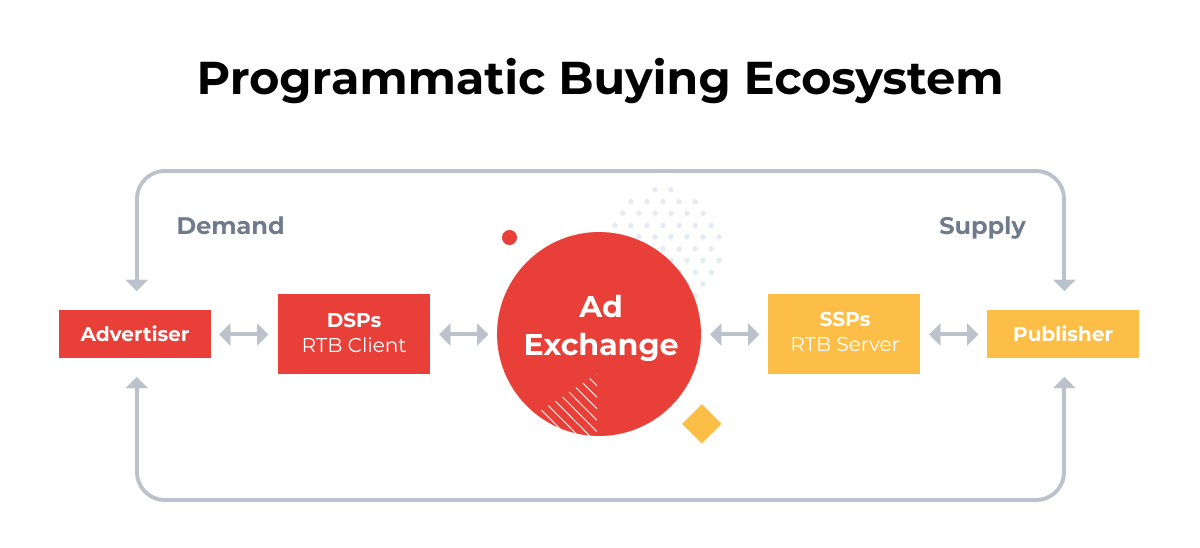
Header bidding sounds like a term of ancient online advertisement industry. It truely is. This word was originated from PC era within early 2010s. Header bidding is a trick of publisher placement auction. In short word, it’s a revolutionary businenss model based on cocurrent technology.
Before header bidding emerging, publishers had to decide one of the inventory monetization channel before deploy their website. After the decision, publishers had to rely on one of the Adnetwork they chose. Moreover if the buyers/publishers wanted to skip the Adnetwork to save cost , it’s not possible or it will cost too much to switch. In the monetization aspects, publishers were not able to voice on the auction. All the programmatic auctions are controlled by Adnetworks, like
Doubleclick Adx, Appnexus, Rightmedia exhange, etc.

What is Vision Pro
 In early June 2023, Apple has launched their new creative AR product which is called vision pro. According to the reaction of the industry , the product is undoubtedly beyond the expectation. On one hand it’s because to of the marketing strategy before its launch that Apple tried their best to pull down industry expectation. While on the other hand , vision pro does bring some features which are not predicted by the media worldwide. For the consumers, the vision pro can act as
Typical case for competitive marketing
When you are about to buy a mobile phone, which brand jumps out first in your mind? Apple iPhone is undoutedly the one leading the option list in the market. But what are the alternatives ? If you don’t have enough budget or you need an Android for a particular purpose, which brand are you thinking of right away when you are composing the list ?
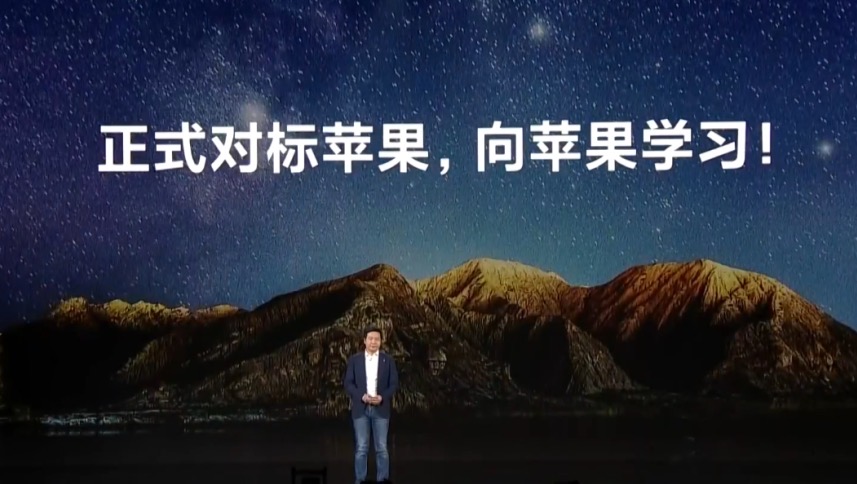
Years ago, Huawei was always marketing with the slogon “To overcome Apple in the industry”. You would think of Huawei phone unconciously when you are reviewing the configuration of iPhone. How about now ?
Maybe you’ve already paid attention to Xiaomi in recent years. Xiaomi CEO Jun Lei has been saying that Xiaomi will fully model itself on Apple. It’ll produce mobile phones with same or superior experience than iPhone.
Is that possible ? We can’t conclude yet. However, by comparing earning report of two companies, the spending on
development , gap of talents and supply chain controlling can’t give out any optimistic prediction for Xiaomi yet. Why do they keep on marketing with something they can’t make it for a while ?

What is Generative AI ?
The concept of Generative AI is hot from beginning of 2023. The technical industry becomes excited than ever before. The technical giants all around the world have started arm race on the generative AI products.
Generative AI refers to the AI model that can be used to generate content based on what it has learned. It has begun to save work load dramatically in the daily r routine. Chat-GPT, Midjourney, Mircosoft designer, etc. All of them have been starting to replace the roles of repetitive work.
Nowadays, generative AI models are used to compose product descriptions, write articles, design product posters, generate marketing assets, etc. More and more cases are coming out. As a veteran of online advertisement, I’m cautiously optimistic on how generative AI can change the world of online advertisement.

What does data mean for marketing
Along with the development of digital marketing, audience data becomes more critical for the campaigns. Nevertheless, how much can data help in the marketing campaigns ? No one can measure that so far like what was happening more than a century ago.
Data plays a very sophisticated role in the online marketing for now, not only for marketers but also for the media providers/publishers as well.Obviously, data is not magic spell. Learning from many campaings, I found many failures were caused by mis-configured data.
Moreover , marketers should not take audience targeting data as the only factor of successful campaigns. Meanwhile, publishers , in some cases may try to convince marketers to rely more on audience data that they can maximize outcome of limited amount of inventory.
Meta which was previously called Facebook, is a traditional social media company. Facebook is obviously their product once shocking the world. It brought brandnew social communication approach to the public. However, as all the other internet companies, it had headache on how to monetize what they have. By checking Meta’s earning report of 2021 and 2022, Advertisement took 99% of it’s income. It seems internet industry can’t find a monetization solution better than advertisement.
Online advertisement is eventually a model of demand and supply. Apparently, Meta is on the supply side. Meta advertisement inventory can be devided into two categories, which are O&O inventory and 3rd party traffic. Meta now is monetizing Facebook, Instagram and Whatsapp. These apps are owned and operated by Meta. The other set is the traffic on the Facebook Audience Network. According to experience of other similar Ad platforms. O&O traffic and 3rd party traffic are taking different position within an online advertising company.
Mostly, O&O traffic plays the role of profit generator, while 3rd party traffic plays the role of scale expander.Two types of traffic are working like gears matching and running the whole machine. Without O&O traffic, companies don’t have capability to build Ad networks from scratch. Withouth extenral 3rd party traffic, O&O traffic will be priced higher and higher and it will result in performance downgrade and advertiser leaving.